Solar panels or photovoltaic panels: is there a difference
Solar and photovoltaic panels for electricity are the same thing. When "solar" means something else, and what kWp, kWh and the other terms in a quote mean.
Updated:
The short answer
When we talk about panels that produce electricity, "solar panels" and "photovoltaic panels" are the same thing. "Photovoltaic" is the technical term you will meet in designs, in the grid operator's documents and in manufacturers' data sheets. "Solar" simply means "of the sun" and is the word most people use in conversation and in a search engine.
If you search for "solar panels for electricity", "photovoltaics" or "a PV system for a house", you are looking for the same thing. The difference appears when "solar" is used for something that does not produce electricity.
When "solar" means something else
"Solar" is the broader word. Besides photovoltaic panels there are solar collectors for hot water, often called "solar hot water systems" or "solar boilers".
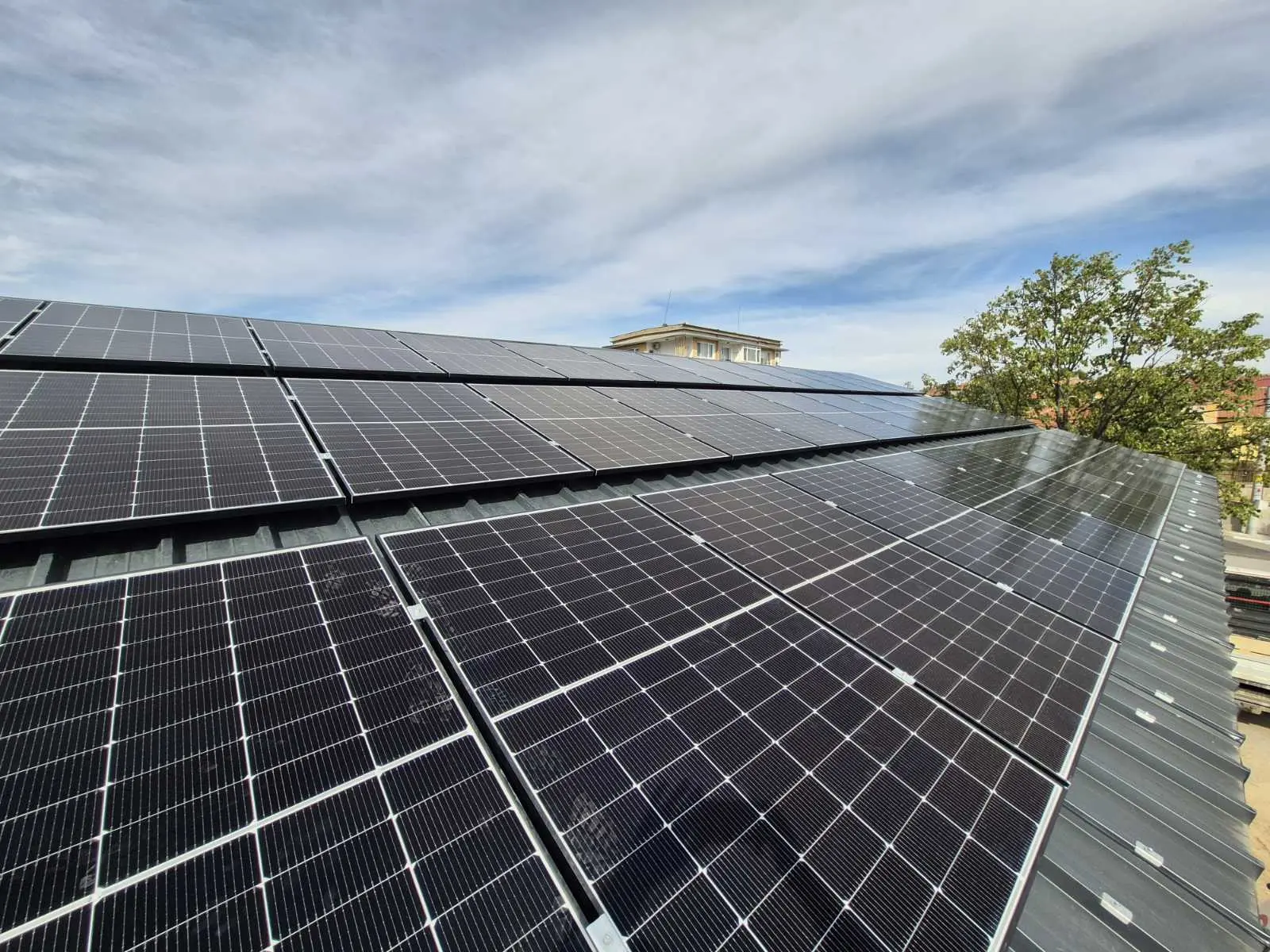
A photovoltaic panel turns light into electrical energy. It is connected to an inverter and to the building's electrical installation.
A solar collector heats a fluid that passes its heat to the water in the tank. It is part of the plumbing and heating installation and produces no electricity.
So when you ask for a quote, it is safer to say "photovoltaic system" or "solar panels for electricity". That way you will not get a quote for hot water collectors when you wanted something else. We work with photovoltaic systems and energy storage systems.
Panel, module, PV, PV plant
Module and panel are the same object. "Module" is what technical documents say; "panel" is what we say in conversation.
PV and photovoltaics are the everyday words for a photovoltaic system: the panels together with everything else.
PV plant (ФЕЦ in Bulgarian documents) is what the whole system is called in designs and in the connection paperwork, even when it is small and sits on the roof of a house.
Inverter is the device that converts the direct current from the panels into alternating current for the building's installation.
kWp, kW and kWh: three different things
These are the three numbers most often confused in a quote.
kWp (kilowatt-peak) is the power of the panels under standard test conditions. It describes the size of the system: "a 10 kWp system".
kW (kilowatt) is power at a given moment. The inverter's power and the site's contracted power with the grid operator are given in kW.
kWh (kilowatt-hour) is energy: what the meter counts and what you pay for. The yearly production of the system and the capacity of the battery are given in kWh.
A reading example: "10 kWp of panels, a 10 kW inverter, a 10 kWh battery" are three different characteristics, not one number repeated three times. The panel power and the inverter power need not match; that is decided when the system is sized.
Grid-tied, hybrid and off-grid systems
A grid-tied system works in step with the distribution grid and normally stops when the grid fails.
A hybrid system combines panels and a battery and, with a correctly designed scheme, can supply selected loads during a grid outage too.
An off-grid system works without an external grid. It needs its own energy balance, reserve and control of generation and loads.
ESS and BESS. ESS is the general term for an energy storage system; BESS is a system based on batteries. Besides the battery it includes the battery management system (BMS), an inverter, metering, protection and monitoring.
Zero Export. A mode in which the system measures the flow at the connection point and controls the inverters so that no energy goes to the grid above the set value.
Contracted power. The power limit for the site agreed with the grid operator. It is not the same as the actual maximum load.
Self-consumption. The part of the produced energy you use yourself, at the moment of production or later from the battery.
Grid operator (ЕРП in Bulgarian). The distribution company that maintains the grid. For the Kardzhali region it is Elektrorazpredelenie Yug. The steps towards it are in the article on connection.
How to use this
When you read a quote for a solar system, find the three numbers: the kWp of the panels, the kW of the inverter and the kWh of the battery, if there is one. Then see what type of system it is and whether backup power is included. With these five things you can already compare two proposals. For the price, see what it is made up of.