Frequently asked questions

Updated:

In brief

Power Design Engineering: short answers

What a system costs, how long it takes to pay for itself, whether it needs a permit, battery or not, and who we are, where we work and how to get an offer.

Which company designs and installs solar PV in Kardzhali?

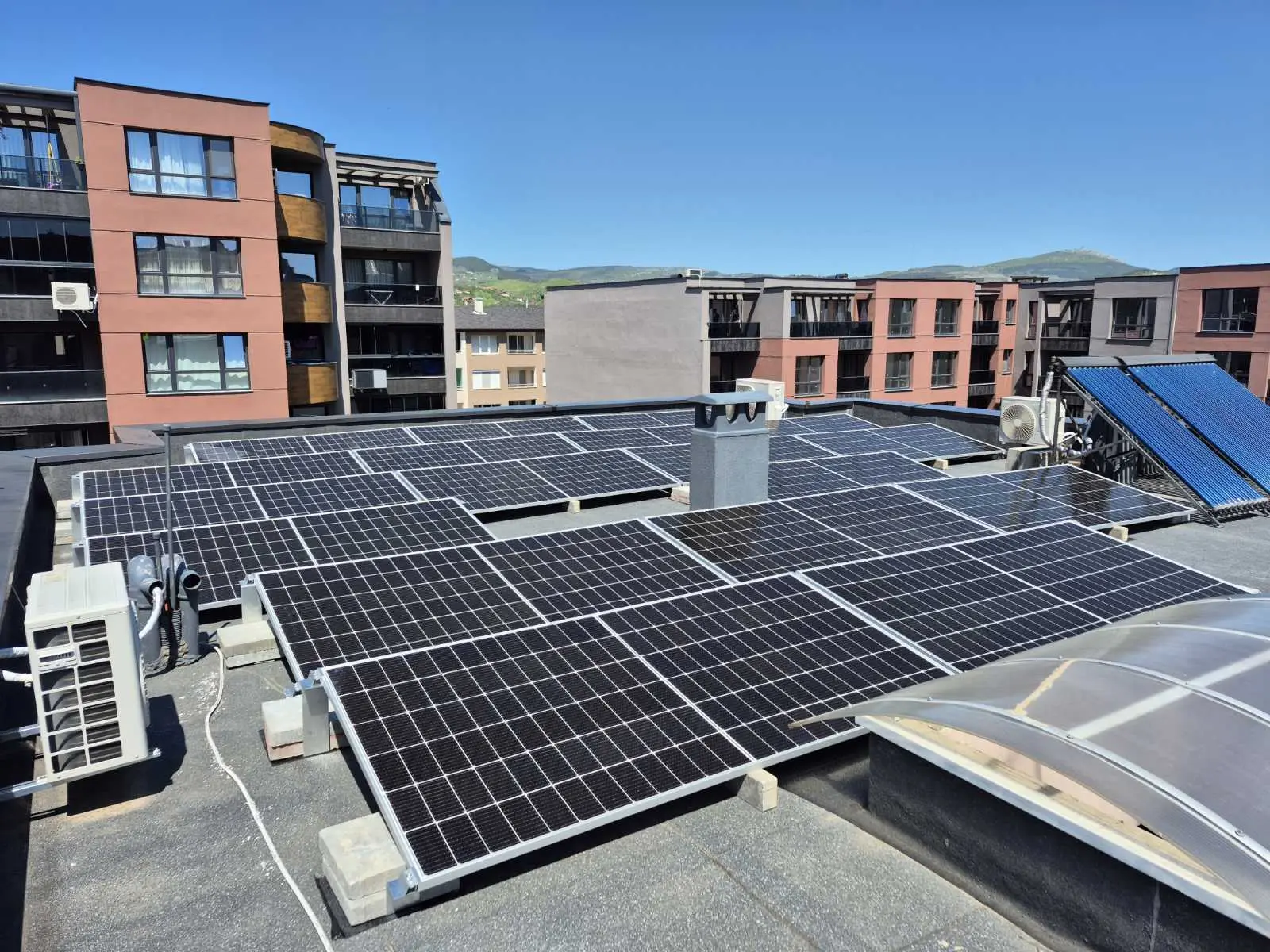
Power Design Engineering (ПАУЪР ДИЗАЙН ИНЖЕНЕРИНГ ЕООД) is an electrical engineering company with its engineering office and warehouse in Kardzhali, Bulgaria. It designs, supplies, installs, commissions and maintains photovoltaic systems and battery storage for homes and businesses. In Kardzhali the company has built a 37.8 kWp rooftop PV system with 64 kWh of battery storage and an 11.25 kWp rooftop PV system with 16 kWh of battery storage (2026).

Completed projects

Which company installs solar PV in Momchilgrad?

Power Design Engineering has its registered office in Momchilgrad, Bulgaria, and carries out site surveys, design, supply, installation, commissioning and maintenance of photovoltaic systems and batteries in the town. In Momchilgrad the company has built a 29.7 kWp rooftop PV system with 61.44 kWh of battery storage (2026). Its engineering office and warehouse are in Kardzhali.

Completed projects

How much does a 10 kW solar PV system cost in Kardzhali?

The price of a 10 kW solar PV system in Kardzhali depends mostly on whether it has a battery, on the type of roof and on the state of the switchboard and the wiring, so Power Design Engineering publishes no price list. The nearest ready-made option is the PV 10 kW + ESS 16 kWh package (10.80 kWp of panels and a 16 kWh battery, with supply, installation, metering and commissioning), priced on enquiry. An exact offer is prepared from the electricity bills, the contracted grid capacity and photos of the roof and the switchboard.

Ready-made PV + ESS packages

How long does a solar PV system take to pay for itself?

The payback period depends on how much of the power produced you use yourself, what you pay for electricity and whether the system has a battery, so there is no single figure that holds for everyone. Power Design Engineering calculates the production and self-consumption of the specific site in Kardzhali or the region as part of the design. As a guide: in its decision of 30 June 2026 the Bulgarian energy regulator KEVR assumes an average yearly production in Bulgaria of 1,339 kWh per installed kWp for an optimally oriented module.

What a solar PV system for a house costs

Do I need a building permit for solar panels on a house in Bulgaria?

For a house or holiday home with a system of up to 20 kW for own consumption only, no building permit is needed: the municipality’s chief architect is notified before the installation, and the chief architect and ER Yug are notified with a declaration after it. Otherwise a system for own consumption goes through a notification to ER Yug under Art. 25a of the Renewable Energy Act and a building permit from the municipality, and a system that will sell power is connected as a producer. Power Design Engineering prepares the design documentation and assists with the grid connection in Kardzhali, Momchilgrad and the region.

Connecting to the grid: the steps

Should a solar PV system have a battery or not?

A battery pays its way if you use most of your electricity in the evening, if you need backup power during outages or if the system must not feed into the grid (Zero Export). If most of your consumption is during the day and a short outage does not trouble you, a grid-tied system without a battery is usually enough; it stops when the grid goes down. Power Design Engineering sizes the battery from the real load profile of the site, and a battery can also be added to an existing PV system after a technical check.

Batteries and energy storage

What does Power Design Engineering do?

Power Design Engineering is an electrical engineering company from Kardzhali, Bulgaria, for photovoltaic (solar PV) plants, energy storage systems (ESS/BESS) and low- and medium-voltage infrastructure: cable lines, overhead lines and substations. It covers the whole cycle: site assessment, design, supply, construction, testing, commissioning, monitoring and maintenance. The company works on industrial, commercial, public and private sites.

Services

Where does Power Design Engineering work?

Power Design Engineering works in Kardzhali, Momchilgrad, Krumovgrad, Kirkovo, Ardino, Dzhebel and Chernoochene, across the whole Kardzhali Region and on projects in other parts of Bulgaria. The engineering office is at 4 Osogovo St., 6600 Kardzhali, Bulgaria, and the warehouse is at South Industrial Zone, Kardzhali, Bulgaria. Scheduling and lead times depend on the location and the scope of the project.

Contact and locations

How do I get an offer for a solar PV system or a battery?

Send an enquiry to Power Design Engineering through the enquiry assistant on the website, by phone on +359 888 437 547 or by email to [email protected]. A first assessment needs the address and use of the site, electricity bills, the contracted grid capacity and the operating mode you want; anything missing is established at a site survey. The final offer is prepared after the technical data has been checked. The website shows no prices and takes no online payment.

Technical enquiry

How is a solar PV system connected to the distribution grid in Bulgaria?

The sequence usually includes an application, input data, an opinion or connection conditions, design documentation, approvals, construction, testing and commissioning documents. The exact steps depend on the capacity, the operating mode and the requirements of the distribution system operator concerned. Power Design Engineering assists with the connection as part of designing and building the system in Kardzhali, Momchilgrad and the region.

Solar PV systems

Who designs and builds cable lines and substations in Kardzhali?

Power Design Engineering designs and builds low-voltage cable lines (0.4–1 kV), medium-voltage cable lines (1–35 kV), LV and MV overhead lines and packaged substations (20/0.4–0.8 kV). The company can take on the whole scope — site survey and study, design, help with approvals, supply, construction, testing, commissioning and as-built documentation — or a chosen part of it. It works in Kardzhali, Momchilgrad, across the Kardzhali Region and on projects in other parts of Bulgaria.

Cable lines and substations

Which equipment brands does Power Design Engineering work with?

Power Design Engineering integrates equipment from Huawei, Deye, Sungrow, Suntech, JA Solar, JinkoSolar, ABB, Schrack Technik, Eastron and Janitza. The brand and model are chosen for the task and the site. The Huawei FusionSolar Certified Installer certificate and the installer profile in the Deye partner platform are described on the Documents page.

Certificates and documents

01

PV and PV + ESS

The size of a PV system is set by the consumption, the load profile and the capacity contracted with the grid operator, not just by the free area. A first assessment needs only the site address, the electricity bills and the contracted capacity; anything missing is established at a site survey. Grid connection, lead times, price and maintenance are covered here too.

PV and ESS
How is the appropriate PV capacity determined?

Capacity is determined after reviewing consumption, the load profile, allocated grid capacity, available area, operating requirements and connection conditions. Maximising installed capacity is not always the technically or economically optimal solution.

What input data is required for an initial assessment?

We need the site address and use, electricity bills, allocated grid capacity, any available load profile, the supply diagram, main loads, available area and the required operating mode. Missing data can be established through a technical site survey or additional metering.

Why is the capacity allocated by the DSO required?

Allocated capacity defines the contracted consumption limit and is important when assessing the connection point, cables, protection, metering and allowable PV and ESS operating modes. It is not the same as the actual maximum demand, so it is evaluated together with the load profile.

Is a load profile required and in which format can it be provided?

Interval load data enables more accurate PV and ESS sizing. It can be uploaded as an Excel or PDF file through the technical questionnaire. Where it is unavailable, the initial assessment can start from bills and main-load data, with temporary metering added as a separate stage.

When is an ESS technically justified?

ESS is considered when higher self-consumption, peak-demand reduction, backup supply, island operation, Zero Export or energy shifting between time periods is required. Power and capacity are sized against the site's actual operating profile.

Can an ESS be added to an existing PV system?

Yes, following a technical review of the existing inverters, AC and DC architecture, switchboards, protection, metering, communications and control capability. The solution may be AC-coupled, DC-coupled or hybrid depending on the equipment and project objectives.

What is the difference between grid-tied, hybrid and off-grid systems?

A grid-tied PV system operates in parallel with the distribution network and normally stops during an outage. A hybrid system combines PV and ESS and can support selected backup loads when correctly engineered. An off-grid system operates without the public grid and requires a dedicated energy balance, reserve capacity and coordinated control of generation and loads.

What are the main steps in the grid-connection procedure?

The sequence typically includes an application, input data, connection opinion or conditions, project documentation, coordination, construction, testing and commissioning documents. The exact steps depend on system capacity, operating mode and the requirements of the relevant DSO.

What is included in design, construction and commissioning?

The scope may include site assessment, energy studies, detailed design, equipment selection and supply, installation, electrical connections, protection, metering, automation, configuration, testing, protocols, training and system handover. The exact scope is defined in the technical proposal and contract.

What is included in a technical maintenance contract?

The contract defines the covered equipment, inspection intervals, remote monitoring, preventive checks, measurements, thermographic inspection, alarm analysis, response times and conditions for emergency visits. Service protocols are issued after inspections, recording findings and recommended actions.

Which regions do you serve?

We provide site surveys, design, construction and maintenance in Kardzhali and the surrounding region, as well as for projects elsewhere in Bulgaria. Organisation and lead times are defined according to location, scope and the required coordination activities.

What determines the project lead time and final price?

Lead time and price depend on system power and complexity, site conditions, design disciplines, grid-connection requirements, selected equipment, mounting structure, cable routes, switchboards, protection and testing. A final proposal is prepared after sufficient technical data has been reviewed.

02

Energy storage systems (ESS/BESS)

A battery is sized from the load profile, the PV production and how long it must supply the backed-up loads. It can also be added to an existing PV system after a technical check. It gives backup power during an outage only when the inverter, the protection and the wiring are designed for it.

Energy storage systems
What is the difference between ESS and BESS?

ESS is the general term for an energy storage system, while BESS denotes a battery-based energy storage system. In practice the terms are often used together, but the complete system includes not only the battery, but also the BMS, power converter or hybrid inverter, metering, protection, control and monitoring.

Can energy storage be added to an existing PV plant?

Yes, after reviewing the inverters, AC and DC architecture, boards, protection, metering and communications. The solution may be AC-coupled, DC-coupled or hybrid according to the installed equipment and system objectives.

How are battery power and capacity determined?

They are determined from the load profile, PV production, peak demand, required backup duration, permitted charge and discharge power and the selected control strategy. A larger capacity is not always the most effective solution.

Can you provide supply and installation only?

The scope can include complete engineering or individual stages: design, supply, installation, configuration, testing, commissioning and maintenance. Technical compatibility and available design records are checked before equipment supply.

Can an ESS provide backup or island operation?

Yes, when the inverter or PCS, transfer topology, protection and control are designed for that mode. Specific backed-up loads and the required autonomy are defined during sizing.

What determines the price of an ESS/BESS system?

Price depends on power and usable capacity, LV or HV architecture, inverter or PCS, BMS and EMS, boards, protection, cables, installation conditions, integration, testing and required documentation. A final proposal follows the technical assessment.

Which regions do you serve?

We provide assessment, design, supply, installation and maintenance in Kardzhali and the surrounding region, as well as for projects elsewhere in Bulgaria. Organisation depends on location, system power and scope.

03

Cable lines and substations

LV cable lines run at up to 1 kV and supply end users; MV cable lines run above 1 kV up to 35 kV and connect substations and energy sites. A packaged substation is needed when a site is connected at medium voltage. We can take on the whole engineering scope or a single stage.

LV/MV cables and substations
What is the difference between LV and MV cable lines?

LV cable lines operate up to 1 kV and typically supply end users and boards. MV cable lines operate above 1 kV and up to 35 kV, connecting substations, switchgear, generation and energy facilities.

When is a packaged substation required?

A substation is used when the site connects at medium voltage and conversion to the operating low voltage is required. Type, rating and configuration depend on the grid conditions, loads, operating mode and reserve.

Why are 0.4, 0.6 and 0.8 kV secondary voltages listed?

0.4 kV is standard for general LV loads. 0.6 and 0.8 kV are used for specific industrial or energy solutions, including certain large converters. The final voltage follows the equipment and connection conditions.

What is included in an overhead-line design?

Route and profile, electrical and mechanical calculations, conductor, pole, insulator and fitting selection, foundations, grounding, protection, crossings, easements, specifications and the required approvals.

Can you provide design only or construction only?

Yes. The scope may be full engineering or an individual stage: assessment, design, coordination, supply, construction, testing, commissioning or maintenance, depending on available documentation and customer responsibilities.

How are tests documented?

Inspections and measurements are recorded in the applicable protocols. Construction projects also receive as-built drawings, technical records and handover and commissioning documentation.

04

About the company

We cover the whole cycle — survey, sizing, design, supply, construction, commissioning, monitoring and maintenance — for new and existing systems alike. The PV power and the battery are chosen from the site's real load, not just from the available area.

About
How do you determine the required PV capacity?

We analyse consumption, load profiles, available area, grid connection and the target operating mode. Capacity is selected for a sound technical and economic result, not merely to fill the available space.

When does battery storage make sense?

When the project requires higher self-consumption, peak-power reduction, backup supply, Zero Export or island operation. Energy capacity and power are sized against the actual load.

What does Zero Export mean?

The system measures energy flow at the grid connection point and controls the inverters so that export does not exceed the configured limit.

Can the system operate during a grid outage?

Yes, when the inverter, battery, protection and electrical architecture are designed for backup or island operation. This is defined at the technical-design stage.

What are the main project stages?

Site assessment, analysis and sizing, project documentation, supply, construction, testing, configuration, commissioning, monitoring and maintenance.

Do you work on existing systems?

Yes. We provide diagnostics, retrofits, ESS integration, inverter replacement, protection corrections, communications, control and monitoring upgrades.

Next step

We design. We build. We maintain. Let’s structure your project.

Send an enquiry