What a battery changes in a solar system, when it makes sense, when you can do without it and why backup power does not come automatically.
Updated:
What a battery changes
A photovoltaic system produces during the day, most of all around noon. Without a battery the energy is used at the moment it is produced: by the fridge, the water heater, the air conditioner, the machines in the workshop. If consumption at that moment is lower than production, the surplus is either limited by the inverter or goes to the grid, when the system is connected in a way that allows it to feed in.
A battery takes in the daytime surplus and returns it in the evening and at night, so more of the production is used on site. The same solar system produces the same with and without a battery. The difference is in how much of the production you use yourself.
When a battery makes sense
Your consumption is in the evening. The family is at work and at school during the day and the power is used after sunset.
You need backup power. Frequent grid outages, a home office, a pump, a heating installation or refrigeration that must not stop.
The system must not feed into the grid. In Zero Export mode the battery takes what the inverter would otherwise limit.
You want to limit peak power. In a small business the battery can take the short peaks in consumption.
You want to move energy between different periods of the day.
When you can do without
Consumption is during the day. A shop, an office, a workshop or a day-shift production use the energy while it is being produced.
You do not need backup power. If a short power cut is not a problem for you, a battery is not a must.
The budget is limited. The battery is a large item of its own in the quote. A well-sized system without a battery is better than a compromise on everything else.
There are often cheaper ways to use more of the production: the water heater, the washing machine, the air conditioner and electric car charging can be moved to the sunny hours.
Backup power does not come automatically
This is often misunderstood. A grid-tied photovoltaic system normally stops when the grid fails, even if the sun is shining. Having a battery does not by itself mean the house will have power in an outage either.
The system can work during a grid outage when the inverter, the battery, the protection and the scheme are designed for backup or island mode. That is decided at the stage of the technical solution. The backed-up loads are defined then too: usually not the whole house but the lighting, the fridge, the heating installation, the internet and a few sockets, and for how long they must run.
How the size is chosen
A battery has two numbers. The capacity in kWh shows how much energy it holds. The power in kW shows how many appliances it can supply at once. A battery with a large capacity and low power will keep the lights on for a long time but will not start the oven and the air conditioner together.
The size is determined by the load profile, the production of the panels, the peak loads, the required backup time, the allowed charge and discharge power and the chosen control strategy. A larger capacity is not always the more effective solution: a battery that does not fill in winter and does not empty in summer is not working for you.
Can it be added later
Yes. A battery can be added to an existing photovoltaic system after a check of the inverters, switchboards, protection, metering and communications. Depending on the existing equipment and the goals of the system, the solution can be AC-coupled, DC-coupled or hybrid.
If you already know at the first installation that you will want a battery later, say so. The choice of inverter and the space in the switchboard are then made with the next step in mind, and adding it becomes simpler.
What a battery system includes
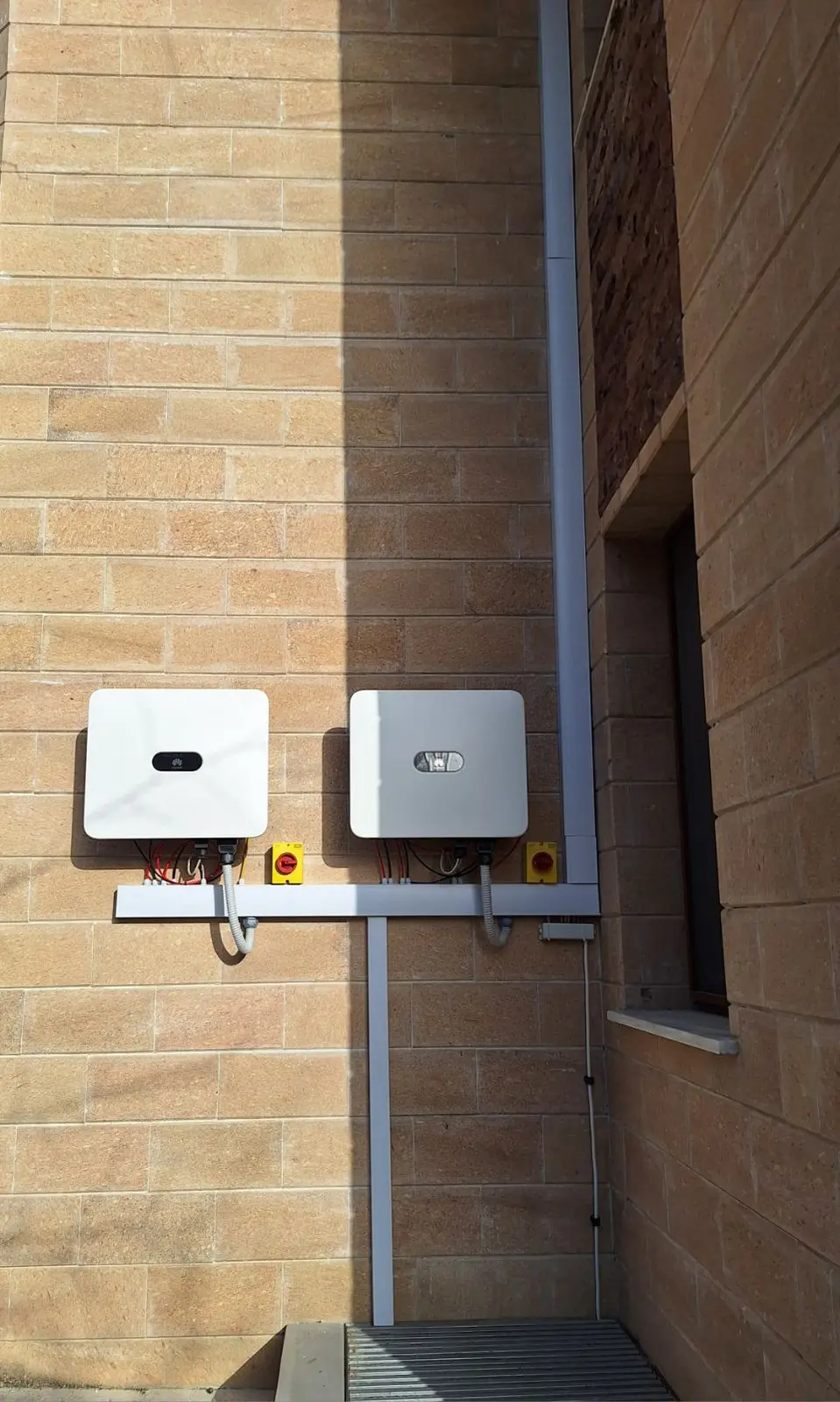
A battery system is not only the battery. It includes the battery management system (BMS), a hybrid inverter or a separate power converter, metering, protection, control and monitoring. The place of installation matters too; it is chosen by the manufacturer's requirements and so that the system can be reached for service.
Under the Bulgarian Renewable Energy Act (Art. 18a, as of October 2026), a consumer of own renewable electricity may also install a storage facility together with their installation. How the battery appears in the documents for the grid operator depends on the particular scheme and is settled in the design.
Five questions before you decide
What share of your power do you use during the day and what share in the evening?
Which appliances must run when the grid fails, and for how long?
Can part of the consumption be moved to the sunny hours?
Will the system be able to feed into the grid, or will it run without feeding in?
Do you want the battery now, or a system that is prepared for one?
With the answers to these questions and your electricity bills we can propose one option with a battery and one without, so you can compare them. See the page for energy storage systems, the ready-made PV + ESS packages and the batteries in the catalogue, or send us an enquiry.